How to Choose Wooden Puzzle Toys: Key Tips for Parents and Teachers
The market is full of wooden educational toys that look alike but differ greatly in learning value. This article helps parents and teachers build clear selection criteria around three aspects: age, play style and craftsmanship.
By: BrainWood Academy Editorial Team Published About 7 min read
Start with your child's age and developmental stage
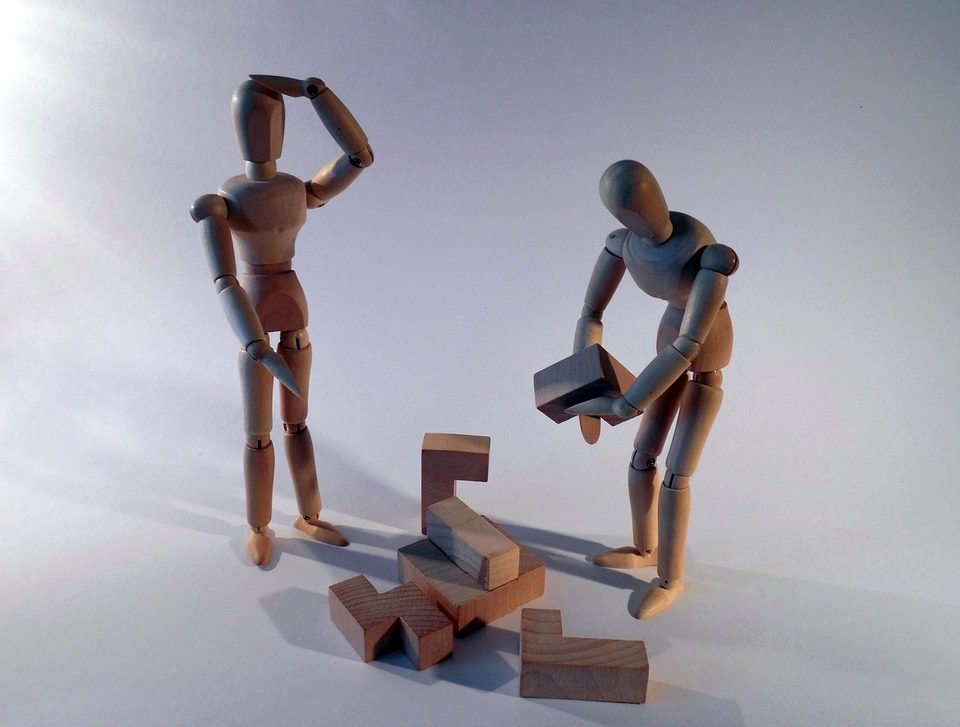
The first step in choosing a toy isn't reading the label on the box, but observing what your child can do right now. Young children's hand muscles, visual recognition and attention span change rapidly, so the same toy means something entirely different at different stages. A toy that's too simple is quickly set aside, while one that's too hard can frustrate a child and even make them avoid similar activities altogether.
The age label is only a guide; what really matters is how your child actually performs. Can they grip steadily? Are they starting to recognize shapes and colors? Can they imitate simple movements? For younger children, large, easy-to-grasp pieces are more suitable; as they grow, you can gradually introduce designs that call for finer handling and planning. Watching how your child plays will help you find the right starting point better than any age chart.
Parents and teachers can also use "achievable with a little effort" as a rule of thumb. The ideal level of difficulty lets a child try, adjust and finally solve the problem on their own, rather than getting stuck at the start or finishing without any effort. If your child completes it easily several times in a row, it's time to move up; if repeated failure makes them lose interest, go back to the previous stage. A toy that grows with the child keeps its learning value for longer.
Open-ended play versus single-solution play
Wooden educational toys fall broadly into two categories: those with a clear right answer, and those that let children combine and explore freely. Single-solution toys, such as fixed-image jigsaw puzzles or puzzle boxes, are good for training observation, comparison and patience, and children get a clear sense of achievement when they finish. The advantage of this type is that the goal is clear, and it's easy for parents to see whether a child has grasped the concept.
Open-ended play has no fixed ending; building blocks and freely connectable 3D components both belong here. Children must set their own goals, try different structures and adjust their approach after failing. This process builds creativity, planning skills and flexibility in the face of uncertainty. A single set can be played in many different ways, and it often stays in use for longer.
The two types don't replace each other; each has its own strengths. When choosing, ask yourself: do I want my child to practice focus and reasoning, or imagination and creation? If you already have many single-solution toys at home, consider adding an open-ended set, and vice versa. With a balanced mix, children build different ways of thinking through both rule-based and free-form play.
Checking the joinery, edges and surface finish
The quality differences in wooden toys often lie in details you can't easily see. Joinery is the first thing to check. Good joints fit tightly, with moderate resistance when pushed in but no need to force them. If parts are loose and wobble noticeably, it affects play and the toy may come apart in use, creating a risk that a child could swallow a small piece.
Edges and surfaces bear directly on safety and feel. Run your fingers along every edge and corner to make sure there are no splinters, cracks or sharp ridges; a toy with properly rounded corners is one a child can hold with confidence. Pay attention to the surface coating too: it should be smooth and even, not sticky, and free of any pungent smell. We recommend not letting young children use toys that have an odd odor.
You can do a simple check before and after buying, with no professional tools needed. The following points can serve as a checklist to go through one by one:
- Parts fit snugly, neither loose nor jammed when pushed or pulled
- All edges and corners are rounded, with no splinters or cracks
- The surface coating is even and smooth, doesn't flake or rub off, and has no pungent smell
- Small parts don't come off easily and aren't small enough for a young child to swallow
- The wood grain and joints show no obvious flaws or glue squeeze-out
How to progress gradually in part count and difficulty
More parts isn't always better; the number should match what your child can currently handle. For beginners, a small number of clearly shaped pieces lets them focus on one simple question: "where does this piece go?" If a child faces a large number of similar-looking parts right away, they can easily give up for lack of a way in, which weakens their willingness to try.
When choosing a toy, look for clearly defined levels of difficulty. A well-designed toy lets children keep growing after they have mastered the basic play: they can add constraints, shorten the time limit, or change how the pieces are combined, so the challenge rises naturally. This progression from simple to complex stays with a child far longer than a toy that merely has lots of pieces, and it spares parents from constantly buying new ones.
Another key to gradual progression is giving children a sense of accomplishment at every stage. When the difficulty is only slightly above their current ability, children stay engaged and keep trying; if the jump is too big, frustration replaces curiosity. Parents and teachers can first observe how long it takes a child to finish the current toy, and how they go about it, and then decide whether to move up, rather than relying only on the age recommendation on the box.
Don't Be Fooled by a Flashy Look
Some toys on the market look exquisite and come in bright colors, yet they don't necessarily support learning. Elaborate paintwork and intricate shapes easily catch an adult's eye, but what children really need is a structure they can handle and think about again and again. If a toy's appeal comes mainly from its appearance, children lose interest after a few plays, and its learning value is limited.
To judge whether a toy is worth buying, ask yourself: once a child has it in hand, what can they do, and what do they have to think about? If the answer is only looking and arranging, it is closer to a decoration. By contrast, a toy with a plain look that calls for reasoning, comparing, or adjusting tends to hold a child's attention longer and builds up experience in observation and judgment along the way.
Overly vivid surface finishes also deserve a closer look. Whether the color is even and whether the paint chips easily bear directly on safety and durability. We suggest shifting your attention from surface flashiness to material quality, structural design, and depth of play. These are the conditions that decide whether a toy can accompany a child's learning for the long term, and they are the biggest difference between professional educational toys and ordinary display toys.
Tips for Using Toys in Everyday Play Time
Even the best toy does nothing if it just sits on a shelf. Building toys into a regular daily play time is what helps children gradually develop habits of focus and thinking. The sessions don't need to be long; what matters is that they are quiet and uninterrupted, so children can concentrate on the problem in front of them instead of being distracted by a TV or phone.
When playing with a child, an adult acts more as a guide than as an answer-giver. When a child gets stuck, first give them time to try on their own, then hint at a direction with a question, such as "Where else do you think this piece could go?" This kind of interaction preserves the child's room for independent thinking and adds a stretch of quality time between parent and child, which is worth more than simply demonstrating the answer.
Teachers using the toys in class can rotate them among groups and encourage children to explain their approach and thinking. The following points can serve as a reference for daily planning:
The toys don't all need to come out at once. Rotating them regularly keeps things fresh for children and prevents their attention from being scattered by too many choices. With a consistent, steady routine, wooden educational toys can become a good companion on a child's learning journey.
- Set aside a short, focused play session every day
- Offer only a few toys at a time to avoid too many choices
- When difficulties arise, wait first, then guide with questions
- Encourage children to explain their solutions and ideas
- Let children help tidy up and put things away after play
Key takeaways
-
Gradual Progression The number of pieces and the level of difficulty should match the child's current ability, set just a little above where they are, to sustain their sense of achievement and willingness to try.
-
Play Over Looks A flashy look does not equal learning value. Look first at whether a toy calls for hands-on handling, reasoning, and repeated adjustment.
-
Part of Daily Life A regular, short, focused play session, together with question-based guidance, lets wooden educational toys deliver their full learning benefit.
This article is for general information only and does not constitute professional advice.